



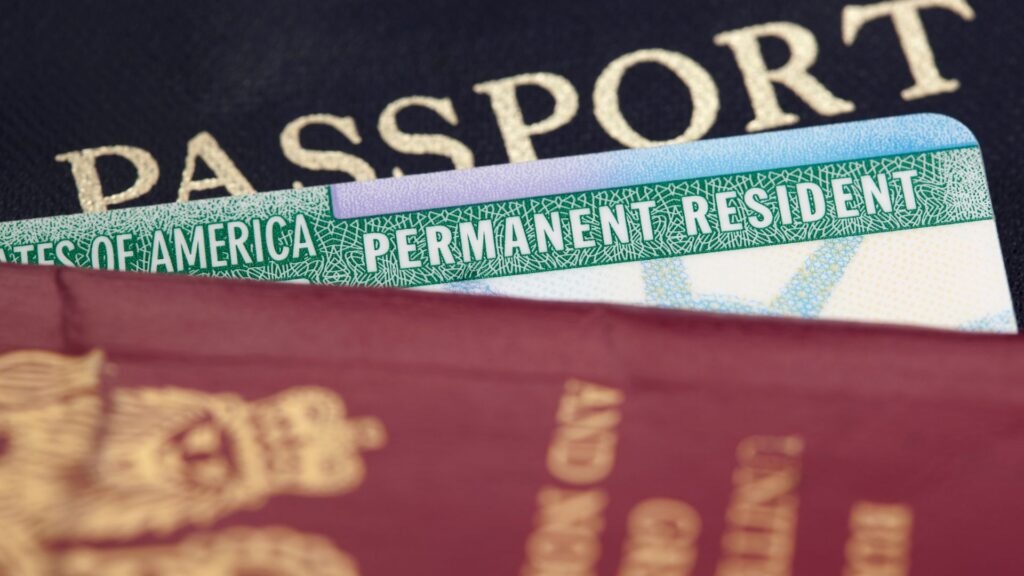












CR6 on a green card means you became a conditional permanent resident as the spouse of a U.S. citizen by adjusting status without leaving the United States. CR stands for conditional resident, and the 6 means you applied from within the country instead of receiving an immigrant visa abroad. The code prints in the Category field on the front of your card.
A conditional permanent resident has the right to live and work in the United States, but the status ends unless the conditions are removed. Conditional status applies because your marriage was less than two years old on the day you became a resident. Your card is valid for two years, and you and your spouse generally must file Form I-751, Petition to Remove Conditions on Residence, together within the 90 days before it expires. Faragalla Law helps conditional residents prepare that petition through its removal of conditions practice.
How Is CR6 Different From CR1 and IR6 on a Green Card?
The Department of Homeland Security (DHS) code list describes CR1 as conditional spouses who arrived with immigrant visas and CR6 as conditional spouses who adjusted status. Both lead to a two-year card and the same Form I-751 requirement. The difference lies in where the case was processed.
IR6 is the version without conditions. A spouse receives it when the marriage was at least two years old at adjustment, as explained in the overview of the IR6 category for spouses. A spouse who entered on a K-1 fiancé(e) visa and adjusted within two years of the wedding receives CF1 rather than CR6.
Take a teacher from Kenya whom U.S. Citizenship and Immigration Services (USCIS) approved in Austin before her second wedding anniversary. Her card would ordinarily show CR6 and expire two years after the Resident Since date printed on the front. She would then have a 90-day window before that expiration to file Form I-751.
When Do You Remove Conditions With CR6 on a Green Card?
If you are still married to the same U.S. citizen, USCIS requires the two of you to file Form I-751 together within the 90-day period immediately before your card expires. USCIS offers an online filing calculator to find the first day of that window. You cannot renew a conditional card with Form I-90.
Suppose you married in good faith but the marriage ended in divorce or annulment, or your spouse died. You may then be able to file alone by requesting a waiver of the joint filing requirement, before or after the 90-day window. Other waiver grounds include abuse by the U.S. citizen spouse and extreme hardship. A properly filed petition produces a receipt notice that extends your status and card, which USCIS describes as a 48-month extension as of September 2026.
USCIS says conditional status automatically terminates if you do not properly file within the 90-day period. The agency then starts removal proceedings, a case in immigration court that decides whether you must leave the United States. A late petition must include a written explanation, and USCIS decides whether you had good cause.
What If CR6 on Your Green Card Is a Mistake?
An officer may assign CR6 even though the marriage had already passed its two-year anniversary at adjustment. The USCIS Policy Manual calls this misclassification and tells officers who find it on a Form I-751 to update the code to IR6. According to the Policy Manual, the error does not make the adjustment unlawful.
The Form I-90 instructions tell a spouse who believes they were misclassified to file under the DHS error reason and include a copy of the marriage certificate. For example, a spouse from Brazil who married in 2021 and was approved in 2024 should ordinarily have received IR6. If that card shows CR6, the spouse could ask USCIS to fix the code. Conditional residents also use Form I-90 to fix other printing errors, such as a misspelled name.
Official USCIS Sources on the CR6 Category
USCIS explains the 90-day window, waivers and the receipt notice extension on its page about removing conditions on permanent residence based on marriage. The USCIS Policy Manual, Volume 6, Part I, Chapter 2, covers the two-year conditional period and how officers correct a misclassified CR6 code.
DHS, through its Office of Homeland Security Statistics, publishes the full list of immigrant class of admission codes, including CR1, CR6 and CF1. Misclassified conditional residents can find the correction steps in the Form I-90 instructions.
Get Ready to Remove Conditions on Your Card in Texas
With CR6 on a green card, your card’s expiration date already sets your Form I-751 deadline. Faragalla Law can help you confirm your filing window, gather evidence of your marriage and prepare the petition.
Conditional residents in Dallas, Austin, San Antonio and beyond can meet with the firm from home. Book a free consultation by calling (800) 707-3038.
You can also contact the firm online and include the Card Expires date from the front of your card.