















Where Can You Find the Document Number on a Green Card?
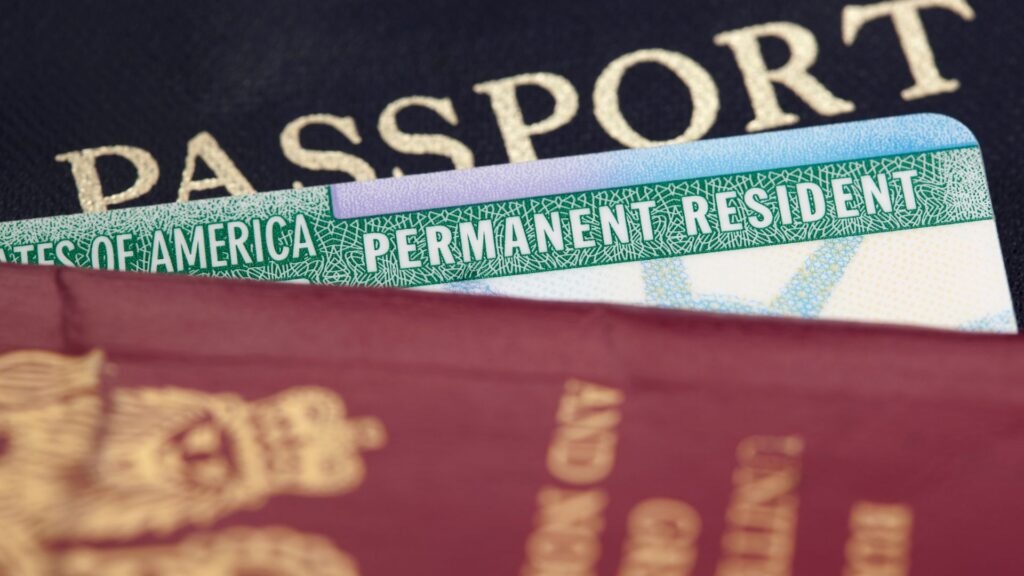
The green card document number is usually the 13-character card number printed in the first machine-readable line on the back of your card.
Faragalla Law answers the immigration questions that green card holders and applicants ask most, from reading the numbers on a card to traveling abroad after a traffic ticket. Every answer in the firm’s immigration FAQs cites official sources, including USCIS, the State Department and the Code of Federal Regulations.
Immigration law is federal, so the same core rules apply in Houston, El Paso and Lubbock. Your own history still decides how a rule applies to you. A short answer explains the general rule, and a consultation shows how that rule fits your documents and your record.
For step-by-step walkthroughs of specific forms, the firm also publishes detailed immigration guides on the K-1 visa, Form I-751, naturalization and more.
No questions match that search. Try a shorter word, or call the firm with your question.
Where each number sits on the card, what the category code means, and what to do when the card carries a mistake.
The green card document number is usually the 13-character card number printed in the first machine-readable line on the back of your card.
The card number on a green card is a 13-character code on the back, in the first machine-readable line, on every design issued since May 2010.
You may be able to travel with an error on your card, but USCIS says incorrect cards must be replaced, and reentry requires a valid, unexpired green card.
You can often find your A-Number on USCIS notices, but the card number is printed only on the card, so copies, employer files or USCIS records may help.
IR6 means you got your green card as the spouse of a U.S. citizen through adjustment of status inside the United States, with no conditions attached.
CR6 means you became a conditional resident as a U.S. citizen's spouse through adjustment of status, with a two-year card and a Form I-751 deadline.
What a permanent resident needs to leave the United States, enter another country and return without trouble.
Yes, green card holders can visit the Dominican Republic with a valid passport, and legal U.S. residents generally need no separate Dominican visa.
Yes, with a valid passport, and a valid green card can also waive El Salvador's visa for some nationalities, so confirm your category first.
Yes, and your passport sets the Saudi visa route, though U.S. permanent residence can qualify some travelers for a visa on arrival.
Yes, green card holders need no passport or visa for Puerto Rico because federal immigration law treats it as part of the United States.
It depends on your passport, since Barbados sets visa rules by nationality and its official list names a green card exemption only for Haitian nationals.
Yes, Aruba exempts holders of a valid U.S. residence permit from its visa requirement, though you still need a valid passport and an ED card.
Usually not, because Mexico exempts visitors with a valid U.S. green card and passport, but an expired card means applying for a Mexican visa.
Voting, firearms, public benefits, security clearances and other areas where permanent residents and citizens are treated differently.
No, Texas limits voting in every election to U.S. citizens, so green card holders must naturalize before they can vote for mayor.
Texas peace officer licenses require U.S. citizenship, except for permanent resident veterans with two years of service who have applied to naturalize.
Yes, the EAR and ITAR treat green card holders as U.S. persons, so sharing controlled technology with them inside the United States is not an export.
Security clearances generally require U.S. citizenship, though a permanent resident may rarely receive a limited access authorization for one program.
Yes, federal law lets permanent residents own guns, but certain convictions, protective orders or a removal order make possession a federal crime.
Yes, green card holders can get SNAP, but most adults must wait five years unless they are under 18, have 40 work quarters or meet another exemption.
How traffic tickets, arrests, convictions and family support problems can affect an application or an existing green card.
A paid speeding ticket usually does not affect a green card case, but arrests, alcohol, injuries or ignored tickets can change how USCIS reviews it.
Unpaid child support is not a bar to a green card, but the adjustment form counts it as a debt, and willful nonpayment can block a later citizenship case.
Aggravated felonies, moral turpitude crimes and drug, firearm or domestic violence offenses can lead to removal, but status ends only with a final order.
You can usually renew a green card with two DUIs, but USCIS runs FBI checks, and some DUI facts can raise removal, travel or citizenship problems.
Employment, employer sponsorship and which relatives can file for you.
No law limits how long you can stay unemployed on a green card, but long trips abroad, benefit use and naturalization rules still deserve attention.
Yes. Non-profits can sponsor foreign workers for green cards like any employer, and universities, research groups and religious groups have extra routes.
Not directly. A grandmother usually petitions for her son or daughter, and grandchildren under 21 can often immigrate with that parent as derivatives.
No, an employer cannot revoke an approved green card, but the government can seek rescission or removal if you were never eligible or used fraud.
Sometimes. A PhD speeds things up only when it helps you qualify for EB-1 or a national interest waiver, and visa waits by country still apply.
What happens after biometrics, after a Request for Evidence and during the immigration medical exam.
No fixed wait applies, because a green card after biometrics depends on your form, your USCIS office, any RFE and whether you need an interview.
Latent TB alone does not make you ineligible for a green card, but a positive test adds medical steps such as a chest x-ray and a Class B2 classification.
USCIS sets no date, but after an RFE response its processing clock resumes where it stopped and the officer may approve, interview, issue a NOID or deny.
You cannot renew an I-94 itself, but many nonimmigrants can ask USCIS for more time by filing an extension request before the admit-until date passes.
Asylum and the Diversity Visa lottery, the death of a petitioner or green card holder, and former citizens who want to return.
Yes. A pending asylum case does not bar a lottery entry, but no DV registration is open as of September 2026 and many asylum seekers cannot adjust status.
Permanent residence ends at death and cannot pass to heirs, but some relatives can continue pending cases under INA 204(l) or as widows or widowers.
Yes, but a former citizen usually needs a family or employment petition, and renouncing to avoid U.S. taxes can bar admission.
If your question is missing from the immigration FAQs, or your facts do not fit the general rule, Faragalla Law can review your documents and explain your options. The firm serves clients across Texas, and consultations take place remotely.
Call (800) 707-3038 to schedule a free consultation.
You can also send the firm a message with a short description of your question and where your case stands.