



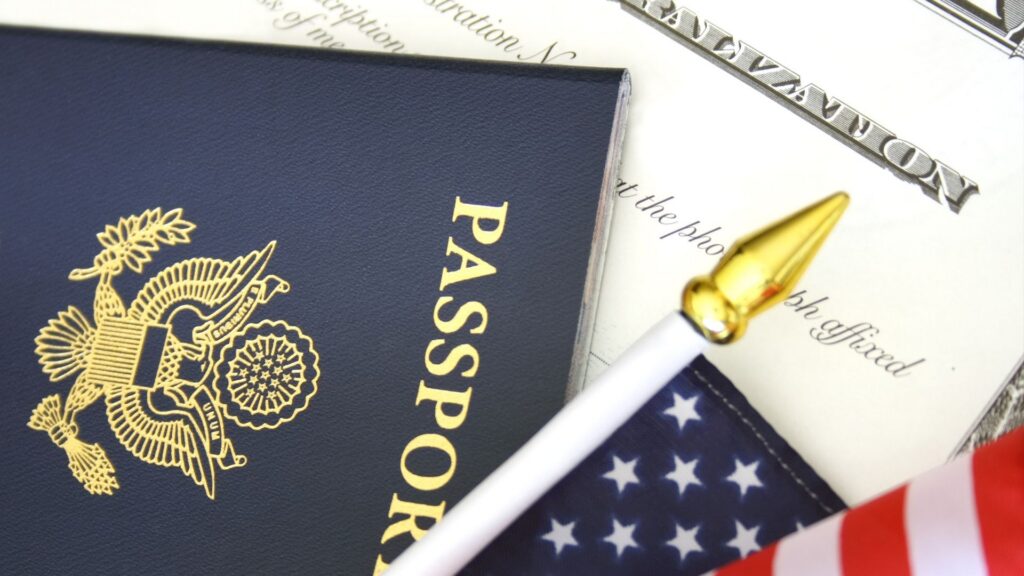
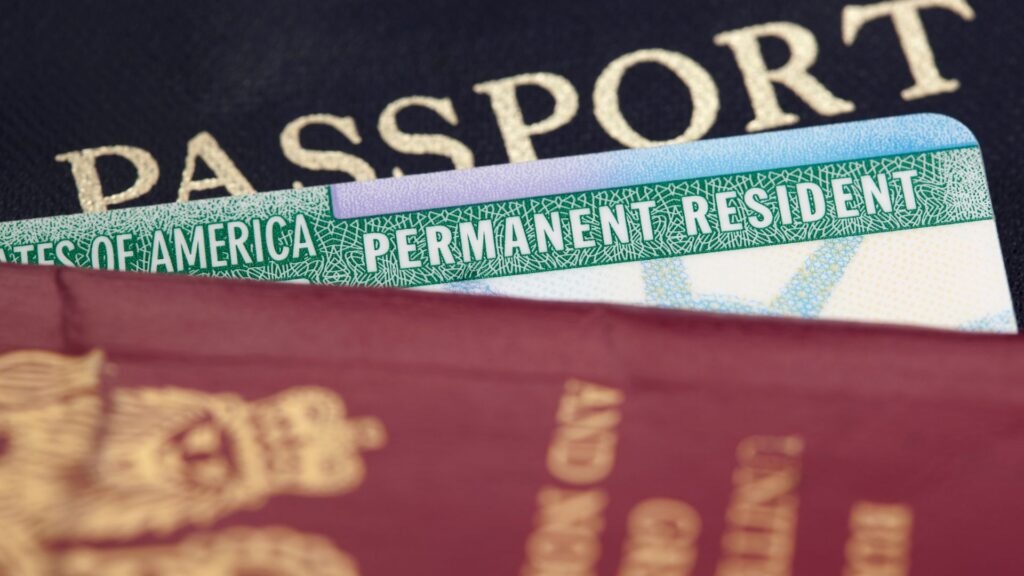













An Austin fiance visa lawyer works backward from the admission date stamped on your I-94. Federal law gives you 90 days to marry the petitioner. Travis County then adds a three-day waiting period and a license that dies on the 90th day. Those two clocks have to line up, and they rarely do on their own.
Faragalla Law is a Texas immigration firm headquartered in Houston at 5718 Westheimer Road. The firm handles K-1 cases for couples across the state, including Austin and the rest of Travis County. Founding attorney Sam Faragalla has been a member of the New York Bar since 1998. The team works with clients in English, Spanish, and Arabic.
If your fiancé lands in Austin soon, call Faragalla Law at (800) 707-3038 before you book a ceremony date. The office answers 24 hours a day, 7 days a week.
When the 90-Day K-1 Clock Starts for an Austin Arrival
Here is the date that decides everything else. The clock does not start when the consulate issues the visa. It does not start when you reserve a venue off South Congress Avenue either. The clock starts the day your fiancé is admitted to the United States. That is why the K-1 fiance visa team at Faragalla Law asks for a photo of the admission record first.
Federal law sets the rule plainly. Under 8 U.S.C. section 1184(d), the petition is approved only after the couple shows they are legally able and actually willing to conclude a valid marriage in the United States within 90 days after the alien’s arrival. You can read the controlling statute at 8 U.S.C. section 1184. Ninety days sounds generous on paper. It stops sounding generous the moment a Travis County license joins the calendar.
What the I-94 Admission Record Actually Shows
Your fiancé receives an admission record at the port of entry. That record, Form I-94, carries the admission date and the class of admission. Pull the electronic copy the same week and save a screenshot of it. Count forward from that date and mark day 90 on a calendar you both look at. Guessing at the date from a boarding pass or a passport photo page is how couples lose two weeks they never had.
Why the Four-Month Petition Validity Is a Separate Clock
Couples mix up two deadlines constantly. Under 8 CFR section 214.2(k)(5), approval of the Form I-129F petition stays valid for four months. A petition that expires through the passage of time can be revalidated for another four months. An officer grants that only after finding you are both free to marry and intend to marry within 90 days of entry. That four-month window governs the visa stage only. The wedding deadline is a different rule, and nothing about revalidation extends it.
One more line in that same regulation deserves attention. Approval of the petition terminates automatically if the petitioner dies or files a written withdrawal before the beneficiary arrives in the United States. Petitioners who are deploying, deeply ill, or having second thoughts should raise it with counsel rather than let the file drift.
How Travis County Marriage License Rules Eat Into Your 90 Days
Now the part that national K-1 guides skip entirely. A wedding in Austin runs through the Travis County Clerk, and that office applies its own timing rules. Those rules were not written with immigration deadlines in mind. They still decide whether you can legally marry on the day you promised your family.
The Travis County Clerk issues marriage licenses through its Recording Division at the Civil Family Courthouse on Guadalupe Street. Completed licenses go back to that same office within 30 days of the ceremony. Two county rules matter more than every other detail on the page. One delays your ceremony by days. The other can void your license before you ever use it.
The Three-Day Waiting Period Under Texas Family Code Section 2.204
Texas makes couples wait before they marry. The Travis County Clerk states that a three-day waiting period runs between the time a license is issued and the ceremony, citing Texas Family Code Chapter 2, Section 2.204. A license picked up on a Friday will not support a Saturday wedding for most applicants. Plan the pickup date around that wait instead of discovering it at the counter. On a 90-day clock, three days is real money.
Who Is Exempt From the Three-Day Wait in Travis County
Four groups skip the wait entirely. The Travis County Clerk lists each exemption on its marriage license page, and each one comes straight from state law. Check whether either of you fits before you assume the delay applies to your ceremony.
- An applicant who is a member of the armed forces of the United States and on active duty is exempt from the waiting period.
- An applicant who performs work for the United States Department of Defense as an employee or contract worker is exempt.
- An applicant who obtains a written waiver from a qualifying judge is exempt.
- An applicant who completes a premarital education course described by Texas Family Code Section 2.013 is exempt.
That judicial waiver route is broader than most couples expect. The county lists five sources for that signature. A judge of a court with jurisdiction in family law cases can sign it. So can a county judge, a justice of the supreme court, a judge of the court of criminal appeals, or a judge of a court of appeals. Keep the option in reserve for a K-1 case that slips late.
How the Texas Twogether Course Removes the Wait
The premarital education route does two jobs at once. Finish a course described by Texas Family Code Section 2.013, hand the Travis County Clerk your completion certificate, and the three-day wait disappears. The certificate has to show completion within one year of the date the application is filed with the clerk. That same certificate drops the Travis County license fee from $80.00 to $20.00 under the Texas Twogether Program.
Why a Travis County License Expires on the 90th Day
This is the rule that quietly ends K-1 weddings. The Travis County Clerk states that a marriage license is valid for 89 days from the date it is issued, and that it expires if it has not been used before the 90th day. Buy the license too early, and it can die before your fiancé even lands. Buy it too late and the three-day wait pushes you past day 90. Read the county’s own marriage license page before you choose a pickup date, because a replacement license has to be purchased outright.
What Happens If the 90-Day Deadline Passes Without a Wedding
Ask the hard question early, while you still have room to fix it. What actually happens on day 91? Couples hope the answer is a fine or a short extension. The statute is blunter than that.
Section 1184(d) says that if the marriage with the petitioner does not occur within three months after admission, the beneficiary and any minor children shall be required to depart from the United States. Should they fail to depart, the same sentence says they shall be removed under sections 1229a and 1231. An Austin immigration attorney reads that text as a design feature rather than a threat, because Congress wrote the consequence into the visa provision itself.
The Departure Requirement Written Into the Statute
Most nonimmigrant categories handle overstays through separate enforcement provisions. The K-1 category does not work that way. Its departure obligation sits inside 8 U.S.C. section 1184(d)(1), only a few clauses after the rule that created the 90-day window in the first place. Congress put the promise and the penalty in one paragraph. That drafting choice is why an unmarried K-1 beneficiary has so few procedural moves left once day 90 has passed.
Why Removal Proceedings Appear in the Text Itself
The statute names sections 1229a and 1231 by number. Section 1229a is the removal proceeding before an immigration judge. Section 1231 governs detention and removal after an order is entered. Naming both in the visa statute removes any argument that a late K-1 wedding is a paperwork problem. Treat day 90 as a legal deadline, not a target date.
How Unlawful Presence Bars Start to Run
A second statute compounds the first one. Under 8 U.S.C. section 1182(a)(9)(B), a person is unlawfully present once they remain after the expiration of the period of stay authorized. More than 180 days of unlawful presence followed by a voluntary departure can trigger a three-year bar on admission. One year or more can trigger a 10-year bar. Those bars reach far past the K-1 case and into every future filing.
The Adjustment Bar at 8 CFR Section 245.1
Here is where a late wedding stops being fixable by simply getting married. Under 8 CFR section 245.1(c)(6)(i), a K-1 beneficiary cannot adjust status unless the application rests on a marriage contracted within 90 days of entry to the United States citizen who filed the petition. Read that requirement twice, because it contains three separate conditions. Miss any one of them and the adjustment door closes.
Three things change the moment day 91 arrives, and none of them is a formality.
- The marriage can no longer support an adjustment application filed on the K-1 entry.
- The statutory departure obligation attaches to your fiancé and to any K-2 children.
- Unlawful presence begins to accrue toward the three-year and 10-year admission bars.
Couples in that position still have options, and some of them involve leaving the country and starting over through a different petition. What they do not have is a quiet way to cure the missed deadline from inside Austin. Get counsel involved before day 90 rather than after.
How Adjustment of Status Works After an Austin Wedding
Marry inside the window and the path forward opens immediately. Under 8 CFR section 214.2(k)(6)(ii), the rule turns on one event. A K-1 beneficiary who contracts a valid marriage to the petitioner within 90 days of admission may then apply for adjustment of status under section 245 of the Act. Minor children who entered as K-2 beneficiaries may apply alongside. That is the same destination reached by a marriage green card case, arrived at through a different door.
The regulation adds one condition that surprises people. Lawful permanent residence granted this way is subject to the conditions prescribed in section 216 of the Act. So the first green card may not be the permanent one, and the wedding date you picked in Travis County helps decide that.
The Conditional Green Card Under Section 216 of the Act
Section 216 creates conditional permanent residence for newer marriages. A couple whose marriage is young when residence is granted receives a card with a limited term rather than a full one. Removing that condition later is its own filing, handled through a removal of conditions petition. Build your evidence from the first month of the marriage, not from the month the petition comes due.
Couples who start collecting proof early almost never scramble later. These are the records that carry the most weight in a Travis County household.
- A joint lease or deed showing both names at the same Austin address.
- Joint bank statements covering the months right after the ceremony.
- Insurance policies naming your spouse as a beneficiary or a covered person.
- The recorded marriage license returned to you by the Travis County Clerk.
- Photographs and messages that track the relationship across time rather than one event.
Keep those records in one place from day one. A file that grows month by month tells a far better story than a folder assembled the week before a deadline.
Why the Wedding Date Sets the Conditional Period
The date on your Travis County license is not just a memory. It fixes how long you have been married when the residence decision lands. A couple that marries on day 30 of the K-1 window has nearly two more months of marriage on the record than a couple that marries on day 88. On the margins, that difference decides which version of the green card arrives.
Marrying on Day 30 Versus Day 88 in Travis County
Picture two couples who land in Austin the same week. One picks up the license immediately, waits the three days, and marries on day 30. The other spends two months planning, marries on day 88, and files at the same pace. Both are lawful. The first couple simply has more married life in the file by the time anyone reviews it.
How the I-751 Filing Window Is Counted
Conditional residence carries its own deadline later. The petition to remove conditions is tied to the anniversary of the date residence was granted, not to the date of your Austin ceremony. Couples who confuse the two dates file early or late and create avoidable problems. Write both dates on the same page of your file and keep them there.
What Happens to K-2 Children Who Entered With Your Fiancé
Children of the beneficiary get their own line in the regulation. Under 8 CFR section 214.2(k)(3), a child may receive the same nonimmigrant classification as the parent without a separate petition, whether accompanying or following to join. Once the qualifying marriage happens, those minor children may apply for adjustment alongside their parent. Their timing runs off the parent’s case, so nothing about their filing should be handled as an afterthought.
Work Authorization While the Adjustment Case Is Pending
Austin couples ask about work in the first conversation, usually because rent is due. Under 8 CFR section 214.2(k)(9), a K nonimmigrant is authorized to work incident to status for the period of authorized stay. A K-1 or K-2 who wants a document proving it must apply, with fee, under 8 CFR section 274a.12(a)(6). The practical question is whether to file that request alone or bundle it with the adjustment package. Any employment authorization plan should be built with the wedding date already fixed.
How an Austin Fiance Visa Lawyer Reviews an I-129F Before You File
Everything above assumes the petition was sound in the first place. Plenty of 90-day emergencies actually began 14 months earlier, at the filing stage, with a box checked wrong. The review that prevents them takes an afternoon.
Two statutory gates catch more petitioners than any other. One tests whether you and your fiancé have actually met in person. The other tests how many K-1 petitions you have filed before this one. Both gates are written into 8 U.S.C. section 1184(d), and neither one bends easily once a petition is already pending with the agency.
The Two-Year In-Person Meeting Requirement
The petitioner must establish that the couple met in person within the two years immediately preceding the filing. That rule appears in both the statute and 8 CFR section 214.2(k)(2). A director may exempt a petitioner only where compliance would cause extreme hardship, or where it would violate strict and long-established customs of the beneficiary’s culture. Failure to establish the meeting or to earn a waiver results in denial, though the regulation says that denial comes without prejudice to filing again once you have met.
The Repeat-Petitioner Limits Under the Statute
Congress capped serial filings. Under 8 U.S.C. section 1184(d)(2), the agency may not approve a petition until it verifies two facts. The petitioner has not previously petitioned for two or more applying aliens. Two years have also passed since the filing of any previously approved petition. A discretionary waiver exists where justification is shown. Pull your own filing history before you assume the limits do not touch you.
A pre-filing review looks at a short list of items that decide most cases.
- Proof the couple met in person inside the two-year window before filing.
- The petitioner’s complete history of prior I-129F filings and approvals.
- Evidence that both parties are legally free to marry today, including final divorce decrees.
- A realistic wedding plan that fits inside 90 days and inside Travis County timing rules.
Run that list before the petition goes out the door. Fixing any one of those items later costs months you will want back when the 90-day clock starts.
Common Questions About the K-1 90-Day Deadline in Austin
These are the questions Austin couples ask most often once the visa is stamped and the flight is booked. The answers below follow the statute, the regulations, and the Travis County Clerk’s published rules. Your own facts can change the analysis, so treat this as orientation rather than advice on your case.
Can We Get Married in Travis County the Day My Fiancé Arrives in Austin?
Usually not, because of the three-day waiting period under Texas Family Code Section 2.204. You can apply for the license that day, but the ceremony normally waits. An exemption such as the premarital education course or a judicial waiver can remove the wait.
Does a Courthouse Wedding Count for the 90-Day K-1 Rule?
Yes. What matters is a valid marriage to the petitioner contracted within 90 days of admission, not the size or setting of the ceremony. A civil ceremony in Travis County satisfies the rule exactly as a large wedding would. Keep the recorded license either way.
What If Our Marriage License Expires Before the Wedding?
The Travis County Clerk states that an unused license expires on the 90th day after issuance and that a new license must be purchased. Buying a replacement is straightforward on its own. The danger is that the replacement plus any waiting period pushes the ceremony past your federal 90-day deadline.
Can My Fiancé Work in Austin During the 90 Days?
A K nonimmigrant is authorized to work incident to status for the period of authorized stay under 8 CFR section 214.2(k)(9). Getting a document that proves it requires a separate application with a fee. Many Austin employers will not onboard anyone without that document in hand.
Do We Have to Marry in Texas If the Petitioner Lives in Austin?
No. The statute requires a valid marriage in the United States within 90 days of arrival, not a marriage in any particular state. Couples who marry elsewhere still deal with that state’s own license rules and waiting periods. Traveling to dodge the Travis County wait often costs more days than it saves.
Talk to an Austin Fiance Visa Lawyer at Faragalla Law Today
The 90-day window closes quickly, and it closes on a fixed date that nobody can move. An Austin fiance visa lawyer who sees the I-94 early can map the license pickup, the waiting period, and the ceremony onto a calendar that actually works. That planning is far cheaper than fixing a missed deadline afterward.
Faragalla Law is a Texas immigration firm headquartered in Houston, serving couples in Austin and throughout Travis County. The firm handles K-1 petitions, adjustment of status after the wedding, and the removal of conditions filing that follows. Founding attorney Sam Faragalla has been a member of the New York Bar since 1998, and the team works in English, Spanish, and Arabic.
Call Faragalla Law at (800) 707-3038 to talk through your dates before anyone books a venue. The office answers 24 hours a day, 7 days a week, which matters when a flight lands late and the clock has already started. You can also reach the firm through its contact page.
Bring the visa, the I-94, and any prior petition paperwork to that first conversation. Ninety days is enough time when the plan is built on real dates.