



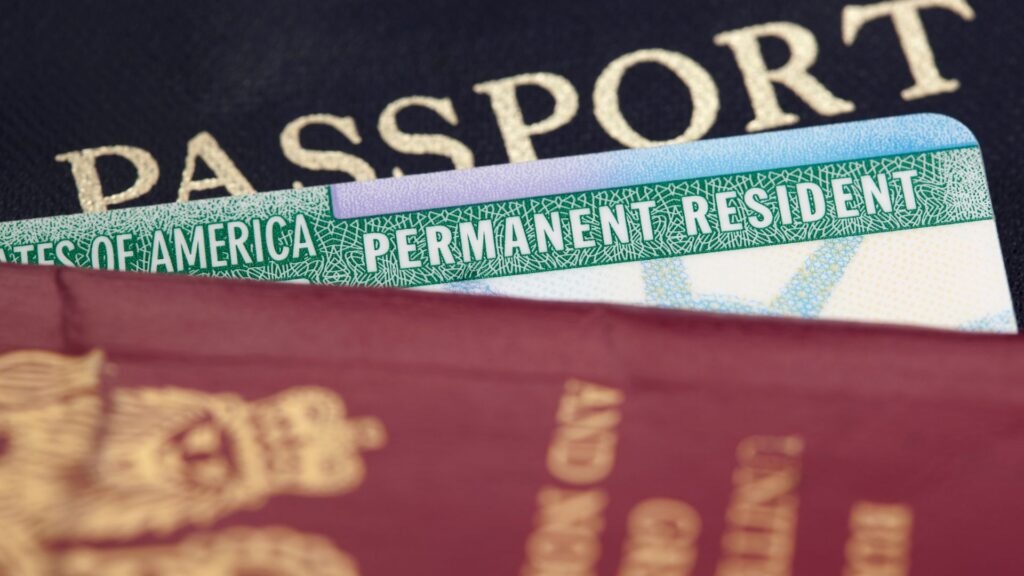












Yes, federal law lets a green card holder legally own a gun, as long as no other federal or state prohibition applies to that person. The federal ban on possession by noncitizens covers people in the United States unlawfully and most people admitted on nonimmigrant visas, such as many visitors and temporary workers. A permanent resident holds valid immigrant status and falls outside both groups.
The right comes with the same limits that apply to U.S. citizens, plus immigration consequences citizens never face. A firearm conviction can make a permanent resident deportable, meaning an immigration judge can order removal from the United States. Faragalla Law defends permanent residents facing removal on those grounds through its removal defense practice.
Which Federal Rules Stop a Permanent Resident From Owning a Gun?
Federal law bars firearm and ammunition possession for several groups regardless of citizenship. They include people convicted of a crime punishable by more than one year in prison and fugitives from justice. The ban also reaches unlawful users of controlled substances and people under certain domestic violence protective orders. A conviction for a misdemeanor crime of domestic violence triggers the same federal ban.
In June 2026, the Supreme Court held in United States v. Hemani that prosecuting one regular marijuana user under the drug user ban violated the Second Amendment. Marijuana remains a controlled substance under federal law, and admitting drug use can create separate immigration problems.
Immigration status can also change the answer. Federal firearm regulations treat anyone under an order of deportation or removal as unlawfully in the United States, whether or not the person has left. A permanent resident ordered removed therefore becomes a prohibited person.
Buying from a licensed dealer requires ATF Form 4473. The form asks for your country of citizenship and your alien registration number. Its instructions say permanent residents may answer no to the question about admission on a nonimmigrant visa. Checking the box for U.S. citizenship could count as a false claim to citizenship, which is its own deportation ground.
Honesty on that form matters for another reason. Federal law makes it a crime to knowingly give a dealer a false statement about any fact material to whether the sale is lawful. A conviction for a false answer about a past case or protective order could carry its own immigration consequences.
When Can a Green Card Holder Legally Own a Gun in Texas?
Government Code section 411.172 sets the eligibility list for a Texas license to carry. Among other things, it requires six months of legal Texas residency or eligibility for a nonresident license. It also requires full qualification under federal and state law to buy a handgun, and it excludes people with recent Class A or B misdemeanor convictions. U.S. citizenship does not appear on that list.
Texas also lets many adults carry a handgun without a license. Under Penal Code section 46.02, unlicensed carry away from your own premises or vehicle is an offense only in listed situations. One example covers people with certain recent assault or disorderly conduct convictions.
Age limits for younger adults have been challenged in court, so check current law before carrying. State carry rules never override a federal prohibition.
Texas adds its own bars. A person convicted of a felony may not possess a firearm anywhere for five years after release from confinement or supervision, and after that only at home. Federal law separately bars possession after most felony convictions, even at home. A person convicted of a Class A misdemeanor assault against a family or household member may not possess a firearm for five years after release.
For example, take a permanent resident in Corpus Christi convicted of a family violence assault four years ago. That person may face both the Texas five-year ban and the federal domestic violence ban. Either one could make possessing any firearm unlawful. The federal ban has no five-year limit and generally lasts unless the conviction is expunged, set aside or pardoned.
Can a Gun Charge Lead to Deportation for a Green Card Holder?
Section 237(a)(2)(C) of the Immigration and Nationality Act covers firearm convictions. It makes a permanent resident deportable after a conviction for buying, selling, owning, possessing or carrying a firearm in violation of any law. That language reaches state weapons offenses as well as federal ones.
Some firearm crimes carry heavier consequences. Firearms trafficking and possession by a prohibited person under several parts of the federal statute count as aggravated felonies, which bar cancellation of removal for permanent residents. A domestic violence conviction is a separate deportation ground, even when the offense involved no gun. Drug, theft and fraud convictions fall among other crimes that can lead to removal.
Consider a permanent resident in Plano who carries a handgun into a place where Texas law prohibits weapons. A conviction for that state offense could also serve as a firearm deportation ground, even though the person owned the gun lawfully.
Official Sources on Guns and Green Card Holders
The federal categories of prohibited persons, including the two noncitizen categories, appear in 27 CFR 478.32, which mirrors 18 U.S.C. 922(g). ATF defines an alien illegally or unlawfully in the United States in 27 CFR 478.11.
Section 237(a)(2)(C) of the Immigration and Nationality Act holds the firearm deportation ground, codified at 8 U.S.C. 1227. The Texas rules appear in Chapter 46 of the Penal Code and Section 411.172 of the Government Code.
Talk to a Houston Immigration Firm Before You Buy or Carry
An old arrest or protective order can change whether federal law still lets a green card holder legally own a gun. Faragalla Law can review your record and explain the immigration consequences of any firearm charge.
Call (800) 707-3038 to arrange a free consultation before you fill out a dealer’s transaction form.
Or write to Faragalla Law with the date and court of any past case or protective order.