



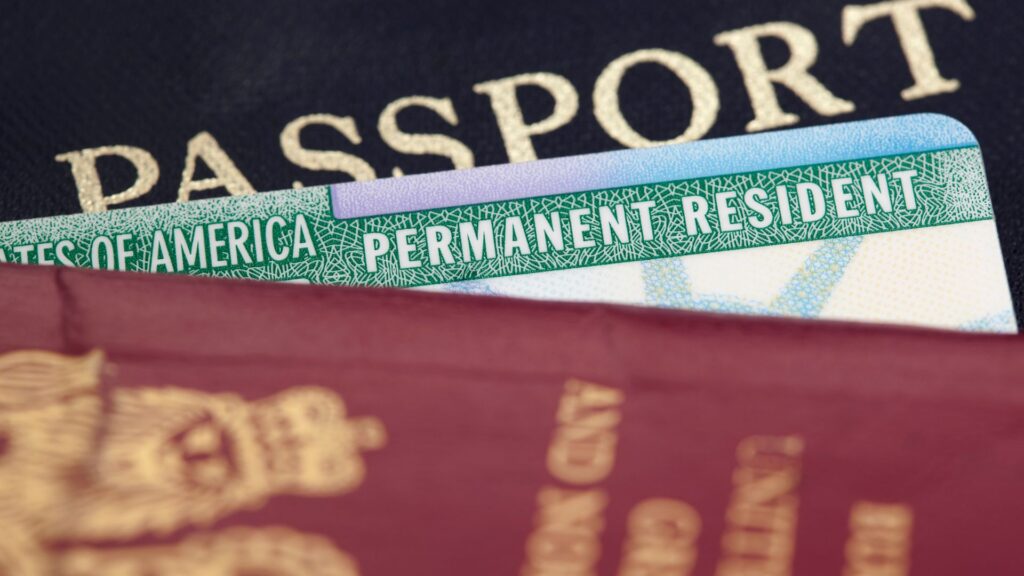










Federal law lets a green card holder qualify for food stamps, now called SNAP, but most adults must first wait five years. SNAP stands for the Supplemental Nutrition Assistance Program. The wait runs from the date the person first held a qualifying immigration status, often the date they became a lawful permanent resident. Children under 18, people with enough work history and a few other groups can qualify sooner.
Every applicant must also meet SNAP’s income, resource and work rules, like any other household. In Texas, the Health and Human Services Commission (HHSC) runs SNAP and applies these federal rules.
Sponsored immigrants face an extra step, because the state counts a sponsor’s income and resources as available to them. Faragalla Law explains sponsor obligations to couples through its marriage green card practice.
How Did the 2025 Federal Law Change SNAP for Immigrants?
The One Big Beautiful Bill Act narrowed which noncitizens can receive SNAP, effective July 4, 2025. USDA guidance dated October 31, 2025 explains that noncitizen eligibility now extends only to lawful permanent residents, Cuban and Haitian entrants and citizens of the Compact of Free Association nations. U.S. citizens and nationals remain eligible as before.
Refugees and people granted asylum who have not become permanent residents lost eligibility under the law. For households already receiving benefits, states apply the change at recertification, the periodic review of a household’s eligibility.
Green card holders kept their eligibility, but the law did not remove the older limits. USDA confirms that the five-year waiting period still applies. Picture a 30-year-old permanent resident in Corpus Christi who received a green card two years ago and has no disability. That person would usually need to wait unless an exemption, such as 40 qualifying quarters of work, applies.
How Does a Green Card Holder Qualify for Food Stamps Before Five Years?
USDA lists several exemptions from the waiting period. They cover permanent residents under 18, those with 40 qualifying quarters of work, people who meet SNAP’s definition of blindness or disability, and people with a U.S. military connection. They also cover people who were lawfully residing in the United States and 65 or older on August 22, 1996.
The 40 quarters rule reaches further than many people expect. Federal SNAP regulations let an adult count quarters worked by a parent before the adult turned 18. They also count quarters worked by a spouse during the marriage, as long as the couple is still married or the spouse has died. A quarter does not count if the worker received SNAP or another federal means-tested benefit during it.
Former refugees and asylees who later became permanent residents get separate treatment. USDA’s December 9, 2025 questions and answers say these residents do not face the waiting period. A federal court in Oregon reached the same conclusion in a case brought by a group of other states.
The Oregon Department of Justice announced that ruling on September 17, 2026. Texas was not among the states that filed the case, so ask HHSC how it applies the federal guidance to your household.
Can Using SNAP Affect Your Green Card or a Future Immigration Case?
For most people who already hold a green card, SNAP use does not reopen the public charge question. Public charge is the test for whether a person is likely to depend on government support. DHS says it generally does not reevaluate inadmissibility after granting permanent residence. The main exception arises when a permanent resident becomes an applicant for admission again, for example after an absence of more than 180 days.
The rule for new applicants changed in September 2026. A DHS final rule effective September 18, 2026 rescinded the 2022 public charge regulation for green card and admission applications filed on or after that date. Officers may now consider receipt of any means-tested public benefit on or after September 18, 2026. Officers judge benefits received earlier under the 2022 standard, which counted only public cash assistance for income maintenance and long-term institutional care at government expense.
Sponsor rules also matter. When a sponsor signed Form I-864, the affidavit of support, the state must count the sponsor’s income and resources as available to the immigrant. That continues until the immigrant becomes a citizen, reaches 40 qualifying quarters or the sponsor dies. Exceptions include immigrants who live in the sponsor’s SNAP household, certain sponsored children under 18, certain battered immigrants, immigrants sponsored by an organization and immigrants the state finds unable to obtain food and shelter.
Consider a permanent resident in Plano whose U.S. citizen brother signed the affidavit of support but lives in another city. HHSC would usually count the brother’s income and resources when deciding the SNAP application, unless an exception applies.
Official Sources on SNAP Rules for Permanent Residents in Texas
USDA’s October 2025 guidance on SNAP eligibility after the 2025 law lists the noncitizen groups that remain eligible and the exemptions from the five-year wait. HHSC’s SNAP food benefits page explains Texas income limits, work expectations and maximum benefit amounts.
DHS explains the new public charge rule, its effective date and its treatment of earlier benefits in its Federal Register notice of July 20, 2026.
Talk With a Houston Immigration Firm Before You Apply for Benefits
Benefit choices can affect a pending or future immigration filing. Faragalla Law can review your status, your sponsor’s affidavit and any plans to petition for relatives. The firm can then explain whether the rules that let a green card holder qualify for food stamps create any risk in your immigration case.
Call (800) 707-3038 or reach the firm through its contact form to arrange a free consultation, even if an HHSC notice has already arrived.
HHSC decides SNAP eligibility itself. Faragalla Law looks at how benefit use and sponsor rules fit with your immigration plans.