













Your N-400 interview is a sworn review of your application, followed by English and civics tests, usually at the USCIS Dallas Field Office in Irving. A Fort Worth naturalization lawyer can sit in, keep corrections straight on the record, and watch the 120-day decision clock that starts that day.
Faragalla Law is a Texas immigration firm headquartered at 5718 Westheimer Road, 1000-109, Houston, TX 77057. The firm serves citizenship applicants across the state, including Fort Worth and the rest of Tarrant County. Founding attorney Sam Faragalla has been a member of the New York Bar since 1998. The team works with clients in English, Spanish, and Arabic.
If your interview notice sends you to Irving, call Faragalla Law at (800) 707-3038 to set up a consultation before the appointment. The line is answered 24 hours a day, 7 days a week.
Which USCIS Office Handles a Fort Worth Citizenship Interview?
Start with the envelope. Your interview notice names the office, the date, and the time. Tarrant County falls under the USCIS Dallas Field Office, which sits in Irving rather than in Fort Worth. The naturalization team at Faragalla Law reads that notice first, because a missed appointment carries its own federal deadline.
Most applicants make two trips before they ever reach an oath ceremony. The first is a short biometrics appointment inside Fort Worth. The second is the interview itself in Irving. Mix up those two addresses, and you can lose a morning or, worse, an appointment.
Biometrics at the Fort Worth Application Support Center
USCIS takes your fingerprints, photograph, and signature at an Application Support Center. The Fort Worth center is at 5932 Quebec Street, Suite 160, and your appointment notice sets the time. Those fingerprints go to the FBI. Under 8 CFR 335.2(b), USCIS schedules the interview only after the FBI sends a definitive response on your background check. A slow result at that stage pushes back the date on your interview notice.
The Interview at the USCIS Dallas Field Office in Irving
The interview happens in person, in front of a USCIS officer, under oath. Under 8 CFR 335.2(a), the examination is uniform throughout the United States, so Irving follows the same rules as Houston. Faragalla Law also represents Dallas immigration clients who report to that same office. Can’t make the date? Under 8 CFR 335.6(a), you have 30 days to explain in writing and ask to reschedule, or USCIS may treat the application as abandoned.
What the Officer Checks Under Oath at a Naturalization Interview
The first part of the interview is not a test at all. It is a sworn conversation about your N-400, one answer at a time. Under 8 CFR 335.2(c), the officer questions you under oath in a setting apart from the public. The officer also corrects the written answers on your application so they match what you say under oath.
That correction rule works for you and against you. A mistake you catch and explain gets fixed in the record. An answer that shifts without explanation lands in the record too.
Corrections You Sign Before You Leave the Room
Every change gets a number. Under 8 CFR 335.2(e), the officer lists each correction on the affidavit at the end of the application. You then swear, under penalty of perjury, that the contents are true and correct. Read every numbered change before you sign. If the case is denied, 8 CFR 335.4 sends that full record to the hearing officer.
Records the Officer Reviews Before You Arrive
The officer does not start from a blank page. Under 8 CFR 335.1, USCIS reviews pertinent records and runs police department checks after you file. The same rule calls for a neighborhood investigation covering where you lived and worked for at least five years, which the district director may waive. Your answers about addresses and employers get checked against more than your memory.
What to Carry Into the Irving Field Office
Bring originals, and bring copies. The statutory period drives much of the packet. It is five years for most applicants under 8 U.S.C. 1427 and three years for many spouses of citizens under 8 U.S.C. 1430. A practical packet for a Tarrant County applicant usually includes these items.
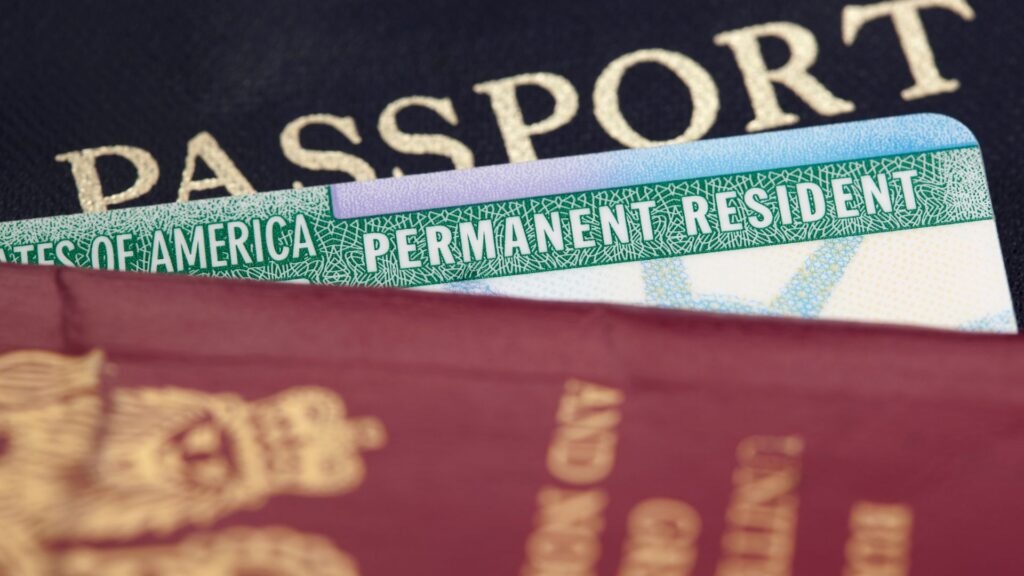
- Your interview notice and your Permanent Resident Card, both in hand at check-in.
- Every passport you used during the statutory period, so the officer can compare trips against your answers.
- Certified court dispositions for any arrest or citation, even one that ended in a dismissal.
- A certified marriage record if you married in Tarrant County, which the County Clerk issues at 200 Taylor Street for $21 per first copy.
- Tax transcripts for any year your N-400 answers flag as unfiled or unpaid.
Lost your card? Start a green card replacement now instead of arriving empty-handed. On the three-year route, expect questions about the marriage itself, the same relationship a marriage green card case first documented.
How the English and 128-Question Civics Tests Work
Here is the part that surprises people. The speaking test starts the moment you say hello. Under 8 CFR 312.1(c)(1), the officer judges your spoken English from the answers you give during the whole examination. Every answer about your trips, jobs, and addresses counts.
Civics is the part that changed. USCIS published the Federal Register notice on the 2025 civics test on September 18, 2025, at 90 FR 45047. It ties your version of the test to your filing date, not your interview date. The same notice left the English portion untouched.
Reading and Writing Under 8 U.S.C. 1423
Reading and writing are tested separately from speaking. Under 8 CFR 312.1(c)(2), USCIS tests those skills in a manner it prescribes and posts the procedures on its website. The statute at 8 U.S.C. 1423(a)(1) says the requirement is met if you can read or write simple words and phrases. It also bars any extraordinary or unreasonable condition on the test.
Which Civics Test Version You Take Depends on Your Filing Date
Check the receipt date on your N-400 receipt notice before you study a single flashcard. The Federal Register notice drew its line 30 days after publication, which landed on October 20, 2025. Anyone who filed earlier keeps the old test. That receipt date is your filing date, not the day you mailed the packet. Study the wrong list, and you prepare for a test you will not take.
Applications Filed Before October 20, 2025
These applicants take the 2008 version of the civics test. The officer asks up to 10 questions from the 100-question 2008 bank, and six correct answers pass. USCIS said it would keep the 2008 study materials online temporarily for this group. If your case has been pending since 2025, that older list is the one to study.
Applications Filed on or After October 20, 2025
These applicants take the 2025 test. The bank holds 128 questions, and each test draws 20 of them at random. Twelve correct answers pass. The officer stops once you hit 12 correct or miss nine, so you may never hear all 20. USCIS calls that stopping rule the only change from the 2020 version of the test.
Exemptions for Older Applicants and Disabilities
Age and residence can change the test. Under 8 U.S.C. 1423(b)(2), English does not apply to an applicant over 50 with 20 years as a permanent resident, or over 55 with 15 years. Applicants over 65 with 20 years get special consideration on civics under 8 U.S.C. 1423(b)(3). They answer 10 questions from a set of 20 and need six correct. A disability lasting at least 12 months can excuse both tests. Under 8 CFR 312.2(b), a licensed doctor or clinical psychologist completes Form N-648 for that exception.
What Happens If You Fail the English or Civics Test in Irving?
Failing once does not end the case. Under 8 CFR 312.5(a), an applicant who fails the English or civics test at the first examination gets a second opportunity within 90 days. Under 8 CFR 335.3(b), a continued case cannot require you to appear earlier than 60 days after the first interview.
How a retest goes depends on why the first attempt failed, so those reasons deserve a close look before the second date. If English tripped you up, practice answering questions about your own N-400 out loud. Speaking gets graded on exactly those answers.
The 60-to-90-Day Retest Window
Put those two rules side by side, and a window appears. USCIS cannot require the retest before day 60, and it must offer it within 90 days. The officer must also tell you in writing what to fix. Use those weeks, and drill the civics version that matches your filing date. Keep that written notice with your N-400 copy, because it lists exactly what the officer wants at the second visit.
Why Postponing the Retest Resets the 120-Day Clock
Read this rule before you ask for more time. Under 8 CFR 312.5(b), you can push the retest past 90 days only by waiving the 120-day decision deadline in writing. USCIS then gets 120 days from the second interview instead. Miss the retest without good cause and notice, and it counts as a failure, which leads to a denial under 8 CFR 335.3(b).
How a Fort Worth Naturalization Lawyer Uses the 120-Day Decision Rule
Every interview ends one of three ways. Under 8 CFR 335.3(a), USCIS decides at the interview or within 120 days after it. Which path you land on turns on your record and the officer’s findings, and no lawyer can promise the result. Here is what each outcome looks like on paper.
- A grant means the officer found you eligible, and USCIS tells you how the oath will be administered.
- A continuance comes with a written list of the grounds to overcome or the evidence to submit.
- A denial arrives as a written notice that states the facts, the legal sections, and your right to request a hearing.
Keep whatever paper you receive. Every later deadline counts from it.
When USCIS Misses the 120-Day Deadline
Congress wrote a way out of limbo. Under 8 U.S.C. section 1447(b), if USCIS fails to decide within 120 days after the examination, you may apply to the federal district court where you live. Under 8 U.S.C. 1446(b), the examining officer must tell you about these remedies at the interview. Listen for that explanation, and ask if you do not hear it.
Why the Clock Starts on Interview Day in Texas
Federal courts once disagreed about what “examination” means in section 1447(b). Texas sits in the Fifth Circuit, which settled it in Walji v. Gonzales, 500 F.3d 432 (5th Cir. 2007). The court held that the 120 days run from the interview, not from the end of FBI background checks. So the count starts the day you walk out of the Irving office.
Filing in the Fort Worth Division of the Northern District of Texas
For most Fort Worth residents, that court is the Northern District of Texas. Its Fort Worth Division sits in the Eldon B. Mahon U.S. Courthouse at 501 West 10th Street. Under 28 U.S.C. 124, the division covers eight counties, including Tarrant, Parker, and Wise. Whether a suit makes sense depends on why the case stalled, so a lawyer reviews the file first.
Why a North Fort Worth Address Can Change the Court
Fort Worth’s city limits cross county lines, and one of them matters here. Neighborhoods in the far north of the city sit in Denton County. Under 28 U.S.C. 124, Denton County belongs to the Eastern District of Texas, Sherman Division. Since section 1447(b) sends you to the district where you reside, check your county before anyone files.
What the Court Can Do With a Stalled Application
The statute gives the judge two choices. The court may decide the application on its own, or remand it to USCIS with appropriate instructions. Neither route guarantees approval, because the court applies the same eligibility rules to your record. Any instructions on remand come from the judge, not the agency.
After a Denial, the N-336 Hearing Comes First
A denial is not the last word. Section 1447(a) lets you request a hearing before an immigration officer, and Form N-336 is the request USCIS uses for it. You cannot skip this step. Under 8 CFR 336.9(d), a denial is not subject to judicial review until you exhaust that hearing. The same rule requires every federal petition to say whether an earlier administrative proceeding upheld the denial.
The 30-Day Deadline to Request a Hearing
Move fast here. Under 8 CFR 336.2(a), the hearing request is due within 30 days after you receive the denial notice. USCIS then schedules the review within 180 days of filing. A different officer handles it, at a grade equal to or higher than the officer who denied you, and can take new evidence.
Federal Court Review After the Hearing
Lose at the hearing, and the next stop is federal court. Under 8 U.S.C. 1421(c), you may seek de novo review in the district court where you reside. Under 8 CFR 336.9(b), the petition is due within 120 days after the final USCIS determination. Your chances there depend on the record and the reasons for the denial.
What the Oath Ceremony Looks Like for Tarrant County Applicants
Approval is not citizenship yet. You become a citizen when you take the oath of allegiance in a public ceremony under 8 CFR 337.1. Right before it, you complete a questionnaire, and an officer may question you about it under 8 CFR 337.2(c).
Anything that changed after your interview belongs in those answers. If derogatory information surfaces, 8 CFR 335.5 pulls your name from the ceremony list and gives you 15 days to respond. Answer the questionnaire as carefully as you answered the N-400. Where the ceremony happens depends largely on one choice, whether you want a name change.
Administrative Ceremonies at the Irving Field Office
Many ceremonies happen without a judge. The Northern District of Texas has authorized the USCIS field offices in its area to hold administrative oath ceremonies. The court notes that the Dallas Field Office periodically offers them at its Irving facility for applicants not seeking a name change. The court does not schedule them, so your USCIS notice is the only reliable source for the date.
Judicial Video Ceremonies for the Fort Worth Division
Want a new legal name along with your citizenship? Then a judge has to be involved. Under 8 U.S.C. 1447(e), a court administering the oath may decree a name change. For the Dallas, Fort Worth, and Lubbock divisions, the court runs those ceremonies by video conference, with applicants seated at the Irving field office. The posted schedule lists October 22, November 5, and December 10, 2026, all subject to change.
When Should a Fort Worth Citizenship Lawyer Attend Your Interview?
You are allowed to bring one. Under 8 CFR 335.2(a), you may request the presence of an attorney who has filed an appearance under 8 CFR part 292. That appearance is filed on Form G-28. The lawyer does not answer for you. You still testify, and your English still gets graded.
Nothing in the rules requires a lawyer at the interview, and a simple file may not need one. A lawyer at your side adds the most in a handful of situations.
- You have any arrest, citation, or conviction, even one that was dismissed.
- You spent long stretches outside the United States during the statutory period.
- Your green card came through a marriage that has since ended.
- You have unfiled tax returns, unpaid taxes, or unpaid child support.
- An earlier immigration filing contains answers that do not match your N-400.
An N-400 puts your whole immigration history in front of the officer, well beyond the last five years. If an old problem could raise questions about how you got your green card, talk with a removal defense attorney before the interview. Couples who went through conditional residence can also review our guide to I-751 documents for Fort Worth couples.
Common Questions About N-400 Interviews for Tarrant County Residents
These are questions Fort Worth applicants often ask once the interview notice arrives. Each answer follows the statute, the regulations, or the Northern District of Texas’s published guidance. Your facts can change the analysis, so treat these as orientation. The firm’s immigration learning hub covers related filings.
What If I Miss My Interview at the Irving Office?
Send USCIS a written explanation and a request to reschedule within 30 days, under 8 CFR 335.6(a). Without it, USCIS may administratively close the case. You then have one year to request reopening in writing, with no new fee.
Do I Have to Answer All 20 Civics Questions?
No. On the 2025 test, the officer stops once you give 12 correct answers or miss nine. Applicants who filed before October 20, 2025, take the 2008 test, which needs six correct answers.
What If I Move Out of Tarrant County Before the Interview?
Under 8 CFR 335.9, you may ask in writing to transfer the case to the office covering your new address. The request goes to the office where you filed. USCIS can refuse, and the original office then decides the case.
Can Family Come to a Video Oath Ceremony in Irving?
Yes, within limits. The Northern District of Texas says USCIS permits up to two guests per applicant at its Irving facility for video conference ceremonies. External video connections are not allowed, so relatives elsewhere cannot watch online.
Talk With a Fort Worth Naturalization Lawyer at Faragalla Law Before Your Interview
The interview notice gives you a date, and the regulations give you a set of clocks. A Fort Worth naturalization lawyer can line up the Irving appointment, the retest window, and the 120-day decision deadline before you walk in. That preparation is far easier than fixing a denial afterward.
Faragalla Law is a Texas immigration firm headquartered in Houston. It serves citizenship applicants in Fort Worth and across Tarrant County. The firm handles citizenship applications, interview preparation, and denials in English, Spanish, and Arabic.
Call Faragalla Law at (800) 707-3038 to go over your notice and your file. The line is answered 24 hours a day, 7 days a week. You can also reach the firm through its contact page.