



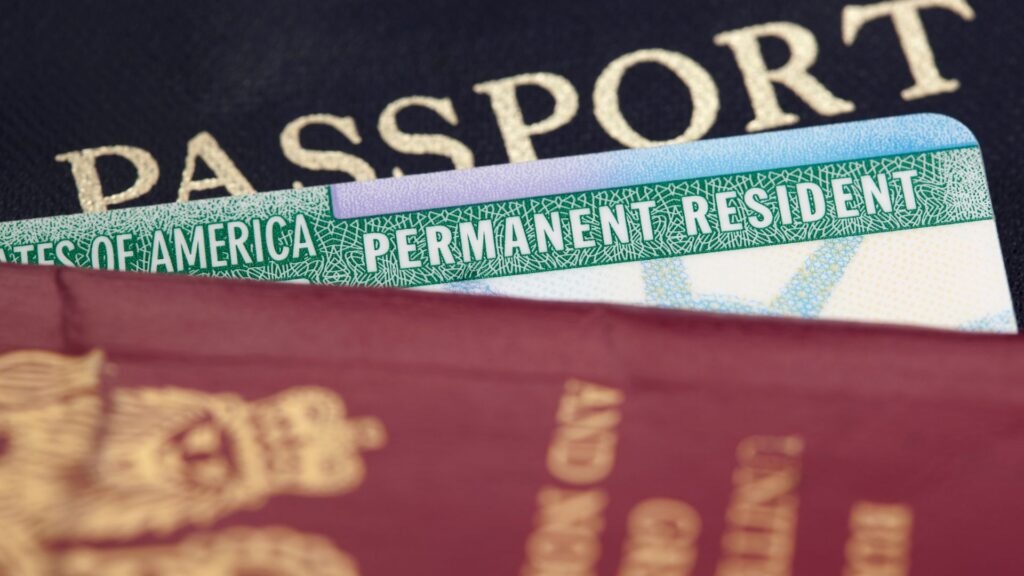












Texas law does not let green card holders vote for mayor, city council, school board or any other office. A green card holder is a lawful permanent resident, meaning someone with permission to live in the United States permanently. Only U.S. citizens can register and vote in Texas elections.
The same rule covers state and federal races. Federal law separately makes it a crime for a noncitizen to vote for President or Congress. A narrow exception protects some people who reasonably believed they were citizens when they voted.
Unlawful voting can make a permanent resident deportable and can block a later citizenship application. Naturalization is the lawful route to a ballot, and Faragalla Law guides permanent residents through that process with its U.S. naturalization practice.
Why Can’t Green Card Holders Vote for Mayor in Texas?
The Texas Constitution bars noncitizens from voting in the state. Voters added an express ban on noncitizen voting to that section on November 4, 2025. The ban reaches every election in Texas, local or statewide.
The Texas Election Code says the same thing in plainer terms. A qualified voter must be a U.S. citizen, and only a qualified voter may vote in an election in the state. That covers a mayoral race, a city bond measure and a school board contest alike.
Consider a permanent resident in San Antonio who renews a driver license in person. State law requires the Department of Public Safety to offer every in-person applicant a chance to register to vote. Accepting that offer does not make a noncitizen eligible, and every Texas registration application includes a statement that the applicant is a U.S. citizen.
Federal law permits a state or city to let noncitizens vote in a purely local contest held separately from federal races. Texas has not done that. If you move to another state, its own law controls, so check it before you register anywhere.
What Happens if a Permanent Resident Votes or Registers to Vote?
Federal immigration law treats unlawful voting as a serious violation. A noncitizen who votes in violation of any federal, state or local law becomes inadmissible. That means the person cannot receive a visa, a green card or admission to the country. The same person is also deportable, so the government can start removal proceedings, the court process that can end in deportation.
A narrow exception applies to these immigration consequences. Each of the person’s parents must be or have been a citizen, and the person must have lived permanently in the United States before age 16. The person also must have reasonably believed they were a citizen at the time.
Registration alone can create a separate problem. Federal law makes it a crime to falsely claim U.S. citizenship in order to register or vote in any federal, state or local election. The penalty can reach five years in prison.
A false claim of citizenship made for a benefit under federal or state law can also make a person deportable. Texas adds its own penalty, since illegal voting is a second-degree felony under state law.
Unlawful voting also affects naturalization. USCIS, the agency that decides citizenship applications, may find that an applicant who registered or voted unlawfully cannot show the good moral character citizenship requires. The same narrow exception applies there.
Picture a permanent resident in Houston who voted in a city election years ago. That person should speak with an immigration lawyer before filing for citizenship or traveling abroad. The facts of what happened, and when, shape the risk.
How Can a Permanent Resident Gain the Right to Vote?
Naturalization is the path. Most permanent residents can apply after five years with a green card, or after three years if married to and living with a U.S. citizen. Because good moral character is one of the requirements, any past registration or vote matters before you file.
After you take the oath of allegiance, you become a U.S. citizen. You can then register to vote in Texas, provided you meet the state’s age, residence and other voter rules.
Until then, decline any offer to register, even from a well-meaning volunteer or a government office. If you already registered by mistake, speak with an immigration lawyer before you cancel or correct the record, because the details matter.
Official Sources on Noncitizen Voting in Texas
The Texas Legislature publishes Texas Election Code Chapter 11, which defines a qualified voter as a U.S. citizen and ties eligibility in every Texas election to that definition. The Texas Secretary of State lists U.S. citizenship first among its requirements to register to vote.
USCIS states on its page on the benefits of U.S. citizenship that only citizens can vote in federal elections. The same page notes that most states limit voting in most elections to citizens.
Questions About Voting and Citizenship in Texas
Texas does not let green card holders vote for mayor, but U.S. citizenship would give you that right. Faragalla Law can review your eligibility and explain what naturalization would require in your case.
Call (800) 707-3038 or write to the firm to schedule a free consultation about your citizenship timeline.
Old voter cards, registration letters and county notices help the firm see exactly what happened. Share them before you file anything with USCIS.